
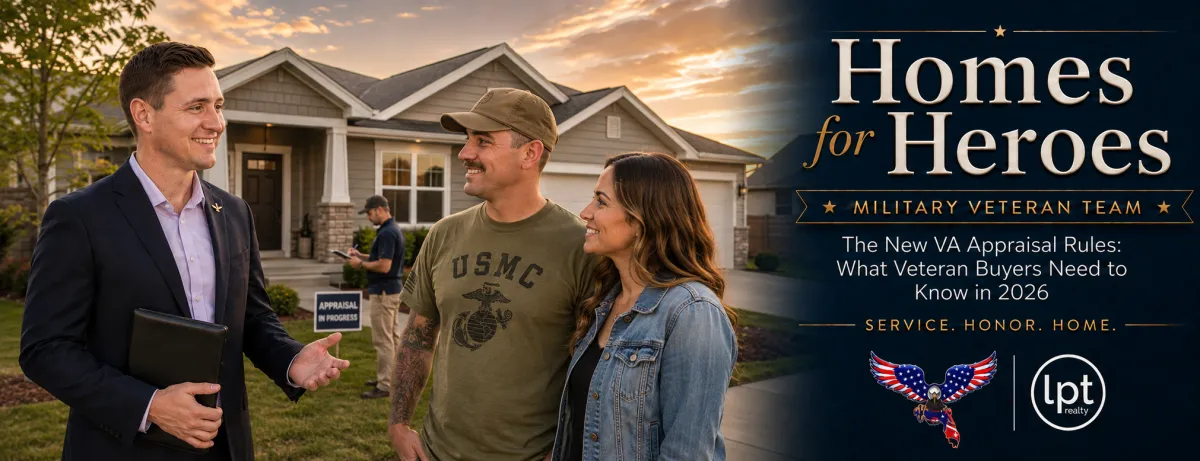
The New VA Appraisal Rules: What Veteran Buyers Need to Know in 2026
For years, one of the most common complaints about VA-backed home purchases has been that the appraisal process can feel more complicated than it needs to be.
That is changing.
In June 2026, the Department of Veterans Affairs updated portions of its Minimum Property Requirements, or MPRs, with the goal of eliminating outdated requirements, reducing unnecessary delays, and helping veterans compete more effectively in the housing market. The changes are already in effect through the revised VA Lenders Handbook.
For military buyers, that matters.
But it is also important to understand what the change does not mean.
A VA appraisal still matters. The property still needs to meet VA standards. And an appraisal is still not the same thing as a home inspection.
Why VA Appraisals Exist
A VA appraisal does two primary things.
First, it helps establish whether the home's value reasonably supports the purchase price.
Second, the appraiser looks at whether the property meets applicable VA Minimum Property Requirements.
Those standards exist because the VA loan program is intended to help eligible veterans and service members purchase homes that are safe, structurally sound, and suitable for residential use.
The problem was that some requirements had become unnecessarily cumbersome or outdated.
VA's 2026 changes are intended to modernize that process.
What Changed in 2026?
Among the revisions, VA removed its previous full radon-gas requirement and changed certain requirements involving homes built before and after 1978. VA specifically said the changes target areas that had frequently contributed to appraisal delays or additional costs for veteran buyers.
That is good news for VA buyers.
It means fewer situations where an outdated technical requirement creates friction without meaningfully improving the quality of the home.
VA also maintains state-specific appraisal fee and timeliness requirements. Updated schedules took effect May 1, 2026, and VA can adjust appraisal fees or timelines in markets where demand requires it.
This Does Not Mean VA Standards Disappeared
This is where buyers need to be careful.
The headline should not be:
“VA appraisals are easy now.”
That is not what happened.
The better interpretation is:
VA is trying to make the process more practical.
Properties still need to satisfy applicable VA requirements.
If there are serious safety issues, major structural concerns, inadequate utilities, or other material property problems, those can still affect the transaction.
The benefit is that veterans should face fewer unnecessary obstacles stemming from requirements VA itself determined needed modernization.
A VA Appraisal Is Still Not a Home Inspection
This distinction is extremely important.
An appraiser is not there to perform the same job as your home inspector.
A home can satisfy the appraisal process and still contain problems worth investigating before you buy.
An independent inspection can help identify concerns involving the roof, electrical system, plumbing, HVAC, appliances, moisture, drainage, and other components of the property.
For most buyers, especially those purchasing from another state or during a PCS, I would never treat the appraisal as a substitute for doing proper due diligence.
This Could Make VA Offers More Competitive
VA financing has sometimes carried an unfair reputation among sellers.
Some assume a VA transaction automatically means more repairs, more delays, or more complications.
Modernizing the appraisal requirements may help remove some of that friction.
That matters when a veteran is competing against conventional financing.
A well-structured VA offer backed by a prepared buyer, experienced lender, and knowledgeable Realtor should be evaluated for what it actually is—not based on outdated assumptions about the program.
The Agent and Lender Still Matter
Rules can improve, but execution still matters.
Your lender needs to understand VA financing.
Your Realtor needs to understand how VA transactions differ from conventional purchases.
And everyone involved needs to communicate early if an appraisal issue appears.
A good team should not panic when something comes up.
They should understand what the requirement actually says, determine what needs to be addressed, and keep the transaction moving.
The Bottom Line
VA's 2026 appraisal changes are a positive development for veteran and active-duty buyers.
The program is becoming more streamlined while maintaining the protections that make VA financing valuable.
That does not eliminate due diligence.
It simply means veterans should face fewer outdated obstacles while using a benefit they earned through service.
If you are considering a VA purchase in Tampa Bay, I would be glad to help you understand how these changes affect the real estate side of your transaction and coordinate with a VA-experienced lender.
Matthew Halliday
Navy Veteran | Realtor
Military Veteran Team | LPT Realty
Homes by a Hero
VA Loans in a High-Rate Market: How Military Buyers Can Protect Their Monthly Payment
When mortgage rates rise, buyers naturally focus on one number:
The interest rate.
And right now, that number deserves attention.
As of August 27, 2026, Freddie Mac reported the average 30-year fixed mortgage rate at 6.66%.
But focusing only on the rate can cause buyers to miss the larger question:
What will this home actually cost me every month?
For military families using VA financing, protecting the monthly payment requires looking at the entire transaction.
Start With the Payment, Not the Maximum Approval
A lender may tell you what you can qualify for.
That does not automatically mean you should spend that amount.
Your monthly housing cost may include:
Mortgage principal and interest.
Property taxes.
Homeowners insurance.
Flood insurance.
HOA or CDD fees.
Utilities.
Maintenance.
For military families, I would add another question:
How comfortable will this payment feel if your circumstances change?
A PCS.
A spouse changing jobs.
Retirement.
A deployment.
An unexpected repair.
The strongest purchase is not necessarily the largest home you can qualify for.
It is the home you can comfortably carry.
Small Rate Differences Matter
At today's rates, even relatively small differences can change the monthly payment.
That is why military buyers should compare lenders rather than assuming every VA loan offer will be identical.
VA loans are guaranteed by the Department of Veterans Affairs, but the mortgage itself comes from a private lender.
Rates, fees, and lender credits can differ.
Shopping the loan can be just as important as shopping the house.
Seller Concessions Can Be Powerful
In the right transaction, the best negotiation may not be reducing the price by a few thousand dollars.
It may be obtaining seller assistance toward allowable costs or negotiating terms that reduce the buyer's cash burden.
Depending on the structure of the transaction and loan requirements, seller concessions or credits may help a buyer preserve savings or address closing expenses.
In some circumstances, buyers may also discuss temporary or permanent interest-rate buydowns with their lender and Realtor.
The important part is comparing the actual financial impact instead of chasing whichever option sounds best.
Do Not Drain Your Savings Just to Close
One of the advantages associated with VA-backed financing is that eligible borrowers can potentially purchase without a traditional down payment requirement.
That does not mean you should arrive at closing with no reserves.
Owning a home means eventually paying for something unexpected.
An air-conditioning repair in Florida.
A plumbing problem.
An appliance failure.
A storm deductible.
A PCS that arrives earlier than expected.
Keeping money in reserve can be more valuable than stretching to purchase the most expensive home possible.
Look Carefully at Insurance
In Tampa Bay, insurance can materially change affordability.
Two homes with similar purchase prices may produce very different monthly expenses depending on roof age, flood exposure, construction characteristics, and insurance availability.
That is why I encourage buyers to obtain insurance information before becoming emotionally committed to a property.
The mortgage rate gets the headlines.
The insurance bill still comes every year.
Consider the Length of Your Stay
Military buyers should also think about how long they realistically expect to own the property.
If another PCS is likely in three years, the purchase deserves a different analysis than a home you expect to own for fifteen years.
Transaction costs matter.
Potential resale matters.
Rental potential may matter.
A purchase needs enough time and flexibility to make sense beyond closing day.
Today's Market Is Not 2021
July 2026 existing-home sales declined 1.7% from June, while the national median existing-home price was $434,100. Inventory represented about a 4.6-month supply.
That is not an extreme buyer's market.
But it is also not the frantic environment many buyers remember from a few years ago.
Some properties may give buyers room to negotiate terms rather than automatically accepting everything the seller requests.
The opportunity depends heavily on the individual property and local market.
Protect the Payment Before You Fall in Love With the House
A beautiful home can make buyers start rearranging the budget to justify it.
I recommend doing the opposite.
Set the comfortable payment first.
Then find the home that fits inside it.
That approach is less exciting than chasing the maximum approval amount.
It is also much easier to live with after closing.
If you are using a VA loan in Tampa Bay and trying to make today's rates work without sacrificing financial flexibility, I would be glad to help you evaluate the entire cost of the purchase—not just the asking price.
Matthew Halliday
Navy Veteran | Realtor
Military Veteran Team | LPT Realty
Homes by a Hero